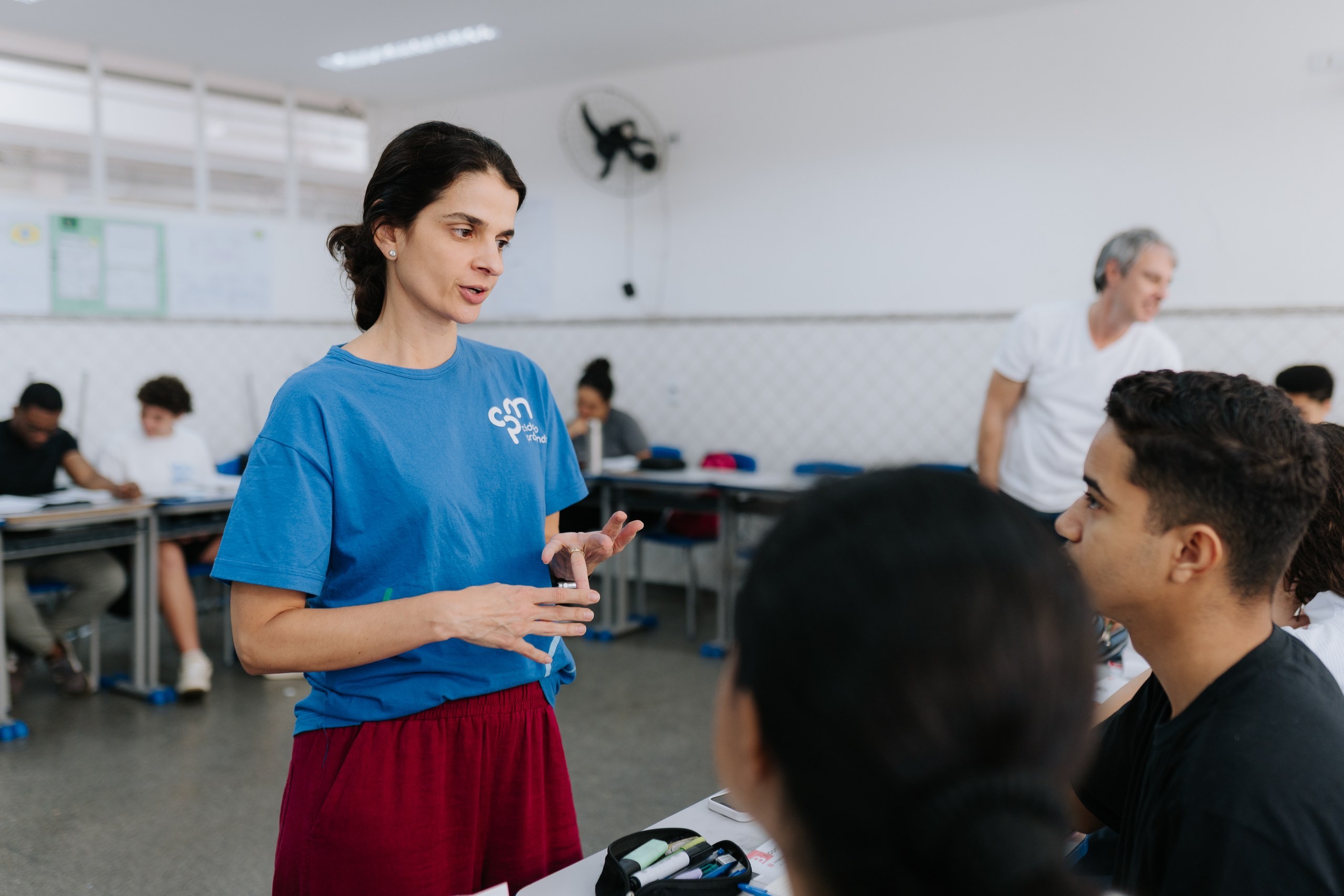
Educational Volunteering in Brazil: Why Training "Volunteachers" Is the Key to Social Impact?
Register to receive our newsletters.


Discover what it means to be a "volunteacher" and why empowering volunteers is the key to transforming English teaching in Brazil. Understand the social impact!
Brazil faces a historic challenge in education. According to recent data, the gap between public and private education reflects not only a difference in curriculum, but also in opportunities and access to global tools, such as command of the English language. In this scenario, educational volunteering emerges as a vital bridge.
However, for that bridge to be solid, it is not enough just to "want to help." Intention must be professionalized. This is where the concept of Volunteachers comes in: training volunteers who work with the mindset and preparation of educators.
In this article, we will explore how training volunteers multiplies social impact and why Cidadão Pró Mundo has been betting on this strategy for decades.
The Education Landscape in Brazil and the Role of the Nonprofit Sector
Education is the main driver of social mobility. However, in Brazil, language education is still reserved for the elite. It is estimated that only 5% of the population speaks English, and only 1% is fluent. For young people entering the job market, the lack of this skill is an invisible barrier to the job market and to higher education.
Education-focused NGOs fill gaps left by the State, but the challenge is scale with quality. Traditional volunteering often suffers from turnover or a lack of method. For this reason, transforming the "volunteer" into a "volunteacher" is the solution to ensure that the student at the receiving end receives excellent instruction, regardless of socioeconomic status.
What is a Volunteacher?
The term, a combination of volunteer and teacher, defines the individual who donates their time to teach, but who is committed to methodology, consistency, and pedagogical development.
The pillars of a successful Volunteacher:
Ethical Commitment: Understanding that the student depends on that class for their progress.
Pedagogical Adaptation: The ability to convey technical knowledge in a didactic and empathetic way.
Social Awareness: Understanding the student’s reality in order to adapt language and support.
Why Training Volunteers Is Part of the Solution?
Many people come to the nonprofit sector with excellent command of English, but without classroom experience. Without proper support, initial enthusiasm can turn into frustration. Investing in the training of these agents brings benefits on three fronts:
1. Guaranteeing Learning for the Student
When the volunteer is trained, teaching stops being intuitive and becomes structured. At Cidadão Pró Mundo, we use validated methodologies that ensure a student from the outskirts of São Paulo or Rio de Janeiro receives the same level of instruction as a top-tier language school.
2. Volunteer Retention and Engagement
A volunteer who feels prepared and supported tends to stay in the project longer. Training gives them new skills (the so-called soft skills and hard skills), turning the act of teaching into a two-way street: they teach English, but they learn leadership, conflict management, and public speaking.
3. Strengthening the Culture of Citizenship
By training volunteers, we are educating more conscious citizens. The "volunteacher" comes to understand the complexities of Brazilian inequalities, becoming a multiplier of social impact in their personal and professional network.
Cidadão Pró Mundo’s Training Model
Cidadão Pró Mundo does more than recruit volunteers; it builds a learning community. Our model is based on:
Initial Training: Aligning expectations and introducing pedagogical tools.
Mentoring and Coordination: Experienced volunteers support new ones, ensuring the exchange of best practices.
Cutting-Edge Teaching Materials: The volunteer does not need to "reinvent the wheel"; they have support from internationally recognized materials.
"Educational volunteering is not about charity; it is about social justice and transferring privilege through knowledge."
The Impact of English on the Careers of Young People Entering the Job Market
Why do we focus so much on English? In Brazil, proficiency in a second language can increase a professional’s salary by up to 60%. For a young person coming from a reality of scarcity, English is the key to:
Access scholarships.
Work at multinational companies.
Consume global technical information.
Develop critical thinking and self-confidence.
When we train a volunteacher, we are actually unlocking the potential of hundreds of young people who only need a real opportunity.
How to become a Volunteacher and change realities
If you have command of the English language and the desire to transform education in Brazil, the first step is to understand that your contribution is worth gold, but your preparation is worth even more.
Tips to get started:
Choose a cause with a method: Look for organizations that offer support and structure for your work.
Be consistent: Education is a long-term process. Consistency is more important than intensity.
Be open to learning: You will enter the classroom to teach, but you will leave with a much broader worldview.
Education as a Collective Effort
Educational volunteering in Brazil is one of the pillars for reducing inequality. By focusing on training volunteachers, we raise the standard of the nonprofit sector and deliver what our students truly deserve: excellence.
Cidadão Pró Mundo believes that education transforms lives, but prepared volunteers transform education itself. Let’s build that future together?
Be a volunteer at CPM
As volunteer at CPM, you can choose to teach English classes or be part of the administrative team at the Teaching Units, in the regular English course or in CPM Qualify, our preparatory course for Cambridge proficiency exams.
Subject to registration availability.