Investing in Education: Why Does the Impact Go Far Beyond the Individual?
Register to receive our newsletters.


On Education Day, it’s common to hear inspiring stories of individual triumph over adversity.
We celebrate the student who, against all odds, learned a new language, won a scholarship, or landed the job of their dreams. These victories are essential and fuel our mission every day.
However, to understand the true magnitude of education, we need to take a step back and look at the bigger picture. Education is not an isolated benefit; it is the engine that transforms the entire architecture of a society.
When we invest in knowledge, we set off a domino effect that reaches the economy, public health, safety, and innovation.
In this article, we will explore how the democratization of education, especially of global tools like English, is the key to Brazil's sustainable development.
The Multiplying Effect of Learning
Often, education is seen through a purely meritocratic and individualistic lens. The common logic suggests that "if you study, your life gets better".
While that is true, this view ignores the collective value of human capital. When a person in a vulnerable community has access to quality education, they become a source of solutions for the problems around them.
An educated mind questions processes, optimizes resources, and proposes innovations that can change local commerce or the management of society. Knowledge is not a finite resource that runs out when someone consumes it; on the contrary, it expands as it is shared.
That is the first pillar of social impact: the creation of community leaders who replicate learning.
The Economy and the Power of Qualification
From a macroeconomic perspective, education is the investment with the highest return on invested capital (ROI) that a country can have. Societies with higher levels of schooling show significantly lower unemployment rates and much greater productivity.
In today's context, fluency in English has become a frontier of inequality. By offering language education to those who previously had no access, we are bringing these talents into the global economy.
This means more income circulating in the outskirts, greater purchasing power, and, consequently, the strengthening of small and medium-sized Brazilian businesses. Professional qualification benefits not only those who receive the diploma, but the entire productive ecosystem, which now counts on more skilled and creative professionals.
Education as a Tool for Social Justice
We cannot talk about education without talking about equity. In Brazil, access to quality education is still a watershed between social classes. When organizations like Cidadão Pró-Mundo work to break down this barrier, what is at stake is reducing historical disparity.
Education is the shortest and most effective path to social mobility. It allows talented young people, who would often be absorbed by informality, to occupy spaces of decision-making.
When we diversify the voices that lead companies and institutions, society as a whole gains in representation and in different perspectives for solving old problems.
The Impact on Health and Safety
It may seem like a distant connection, but education levels are directly linked to health and public safety. Studies show that communities with greater access to information and critical thinking have better preventive health indicators.
Knowledge allows people to make more conscious decisions about nutrition, hygiene, and medical care.
In the area of safety, education offers horizons. For a young person in a vulnerable situation, access to education and to a support network like CPM's means the possibility of envisioning a different future.
It is prevention acting at the foundation, turning what would be risk statistics into stories of professional success and active citizenship.
The Role of Volunteering and Collaboration
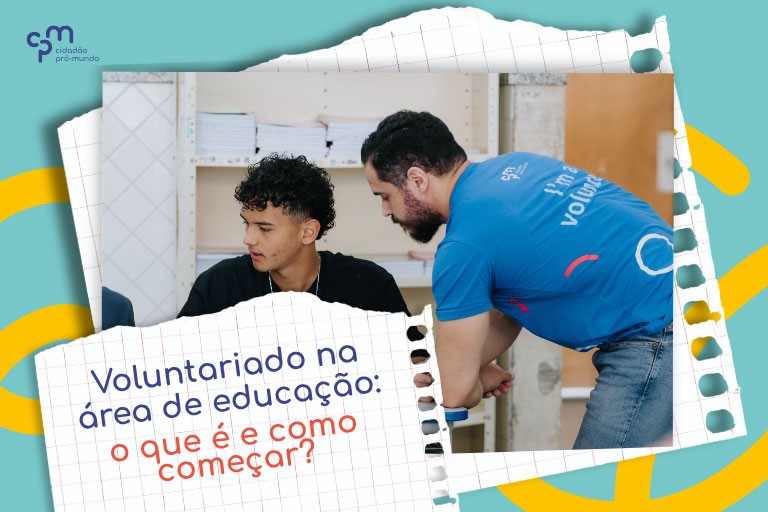
Investment in education does not come only from the government or large corporations. It comes from civil society. Volunteering is one of the purest forms of social investment.
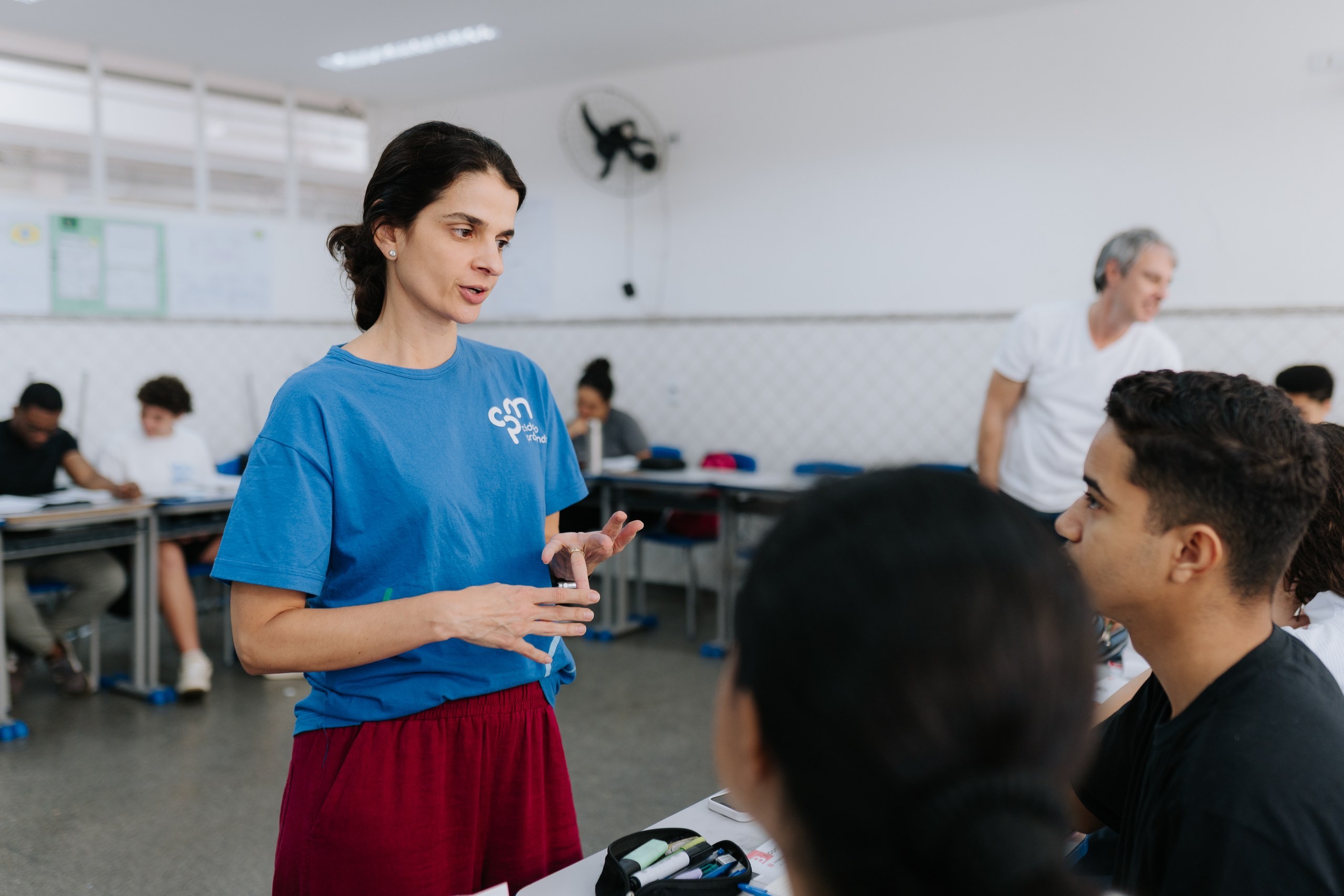
When a mentor or teacher dedicates their time to teaching, they are transferring privilege and turning it into a collective opportunity.
This exchange creates a culture of solidarity that strengthens the social fabric. The volunteer also learns, develops empathy and understanding of realities different from their own, becoming a more aware citizen engaged in systemic causes.
It is a cycle in which everyone wins, and the barrier of "us versus them" begins to be dismantled.
The Future Is Collective
Celebrating Education Day is recognizing that we are all in the same boat. If part of our society does not have access to the tools to grow, the entire country stagnates. On the other hand, when we open the doors of knowledge to everyone, we are paving a road of progress that knows no limits.
At Cidadão Pró-Mundo, our commitment is to continue being that bridge. We believe that English is only the beginning of a journey of empowerment that will transform neighborhoods, cities, and, eventually, the country.
Education changes people. But it is educated people who, together, change the world. How about being part of this movement? Whether as a student, volunteer, or donor, your investment in education is, in fact, an investment in the future of all of us.