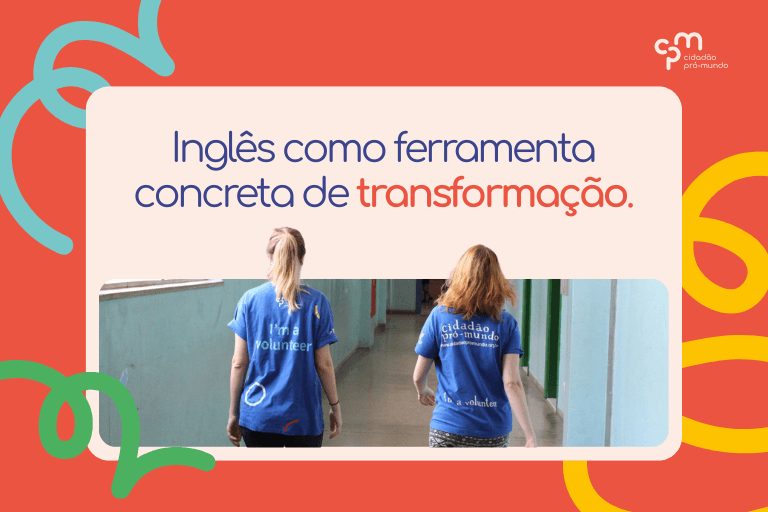
English as a concrete tool for transformation
Register to receive our newsletters.


When we think about learning a new language, it is common to associate English with travel, subtitled films, or career opportunities. However, mastering English goes far beyond what it seems at first glance. It represents a concrete tool for personal, social, and economic transformation in the lives of those who learn it.
More than a language: a tool for access
English is the most widely spoken language in the world in international contexts. Mastering this language allows individuals to access high-quality content, such as courses, books, scientific research, and information that, often, is not available in Portuguese. This broadening of horizons is one of the first signs of transformation: the student no longer depends on translations and gains direct access to global knowledge.
In addition, learning English is an important step toward intellectual autonomy. It means being able to form your own opinion from diverse sources and actively participate in debates and international contexts, whether in academic, professional, or cultural settings.
Professional and economic transformation
From a practical standpoint, English opens doors in the job market. Being fluent in the language can significantly increase the chances of employability and career advancement, especially in multinational companies, startups, and sectors linked to technology and innovation.
But the transformation is not limited to increased income. English also allows professionals to export their services, work remotely for companies outside the country, or even start businesses in new areas with greater confidence.
Social impact: change multipliers
When a person learns English, they do not change only their own reality. Often, they become a bridge for the transformation of others around them — whether by teaching what they have learned, encouraging friends and family, or becoming an example that it is possible to reach new heights through education.
Social programs that teach English, for example, are powerful tools for inclusion and social justice. They not only educate students; they shape citizens who are aware of their potential and prepared to act in a globalized world.
Learning English with purpose
Learning English can (and should) be more than memorizing grammar rules or repeating set phrases. When taught with purpose, the language becomes a tool for expression, belonging, and transformation.
At Cidadão Pró-Mundo, we believe that teaching English is a way to transform realities in a concrete way. That is why our focus is on offering accessible, high-quality teaching that is connected to each student’s challenges and dreams.
Whether it is to land a job, access academic content, or simply communicate with the world, English is indeed a tool for transformation. And that transformation begins with a choice: to learn.